Californian film-maker and James Joyce aficionado Gerry Fialka and I sat down for a very interesting interview on July 24th, 2020. He’s been collecting thought-provoking questions and I tried to give them my best answers. 🙂…
Author: Clinton (Page 6 of 8)
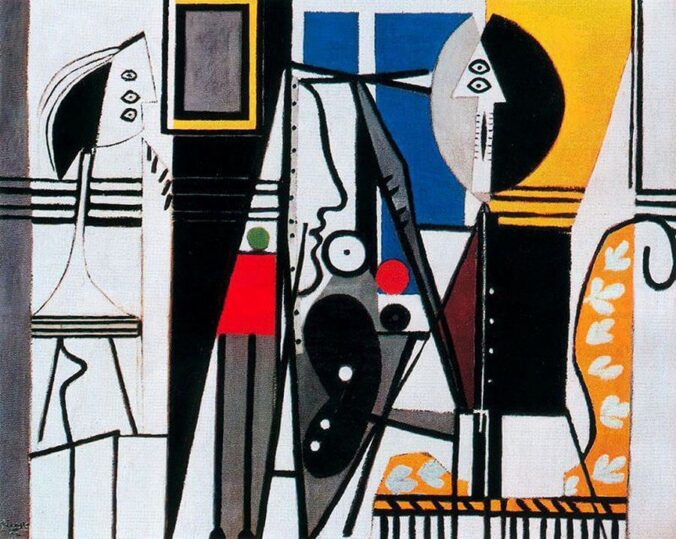
The Corporate Mob
The simultaneity of electric communication creates an environment of togetherness for users. By using these media, individuals are irresistibly collectivized through its content. Individuals whose bodies are scattered across the habitable face of the planet get the uncanny sense of being in the same place, creating shared memories in common and, thus, share in common identity. Having traveled together, the result is a tribalism which is called—quite pointedly—mass. Communing in the same shared electric body, mass audiences are the dominant subject of 20th century history: it is the mediums of press, radio, and television which unite the developed world.
The innate sense of belonging, or co-involvement in a group is palpable. And yet today we find that sense of electric interrelation artificially mis-interpreted, pigeonholing our modern tribal identity into statistically-quantifiable, superficial signifiers. The source of our feeling of belonging to …
Very glad to present to the Media Ecology Association yesterday. 🙂…
After Marshall McLuhan’s passing in 1980, educator and lifetime New Yorker Neil Postman became the central figure in the field which has come to be known as Media Ecology.
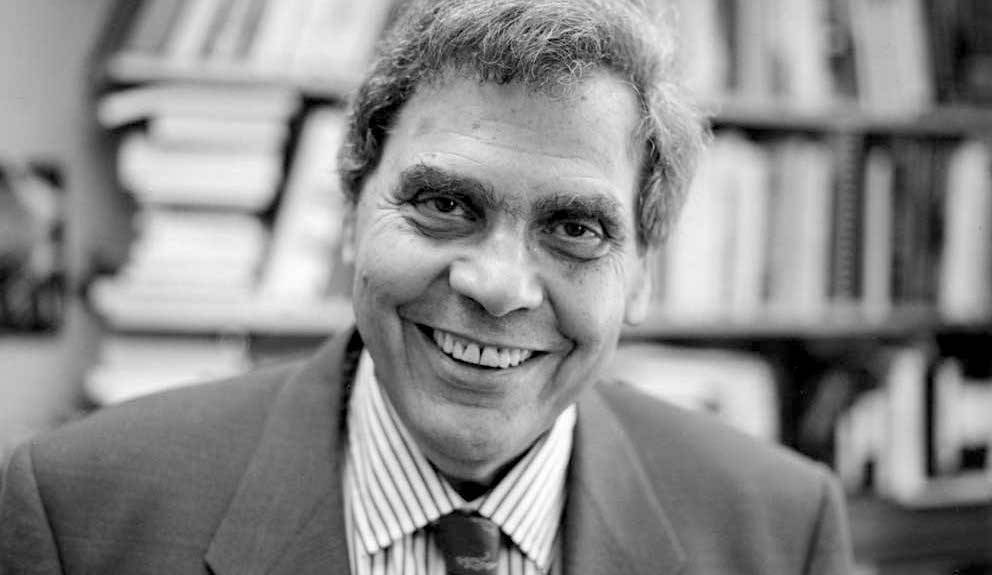
Through his work both in founding Media Ecology as a graduate program and in authoring many of its key texts, such as Amusing Ourselves to Death, Technopoly, and Building a Bridge to the Eighteenth Century Postman taught generations growing up late in the age of television—during the early rise of microcomputers—to use enlightenment values in carefully and consciously assessing the potentials and morality of modern technology through consideration of his six questions, which are:
…1. What is the problem to which this technology is the solution?
2. Whose problem is it?
3. Which people and what institutions might be most seriously harmed by a technological solution?
4. What new
Human being can be considered from two inextricably interwoven perspectives: Human nature and the human condition. Think of it as nature vs. nurture, except what is nurturing our being is the total physical environment all together.
Since post-modern theories of Social Constructionism focuses only on the content of media as environmentally-constitutive, it fails to present a relatable account of the contemporary human condition for a growing number of people. That is where Media Ecology comes in.
Creating and internalizing a fuller view of our material, technological world allows all human being—human beings—to become clearer and more relatable by relief. People as products of their environment become distinct and empathetic as we internalize the total environment as backdrop and see how it differently shapes all of us.
Only once we see the physical world for what it is can we put …
Continuing my extraction of interviews from the 1995 Understand McLuhan interactive CD-ROM, I’m very happy to share an interview with Robert K. Logan, former University of Toronto physics professor, communications theorist, author and collaborator with Marshall McLuhan. His defense of his colleague and friend, McLuhan Misunderstood: Setting the Record Straight, is an invaluable essay providing essential context for reading and empathizing with the “guru of the electronic age”. Nobody can better provide a “hard science”-informed bridge to the enigmatic, artistic McLuhan than Bob Logan.
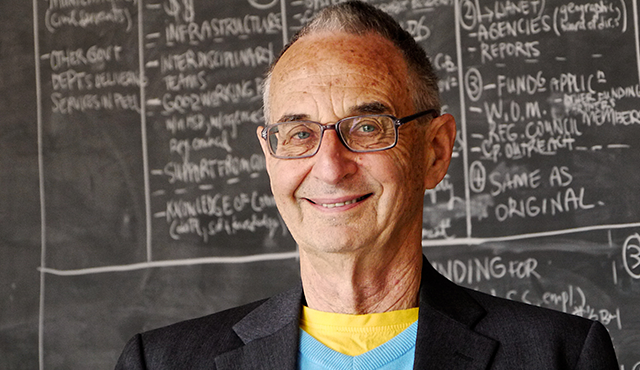
Q: Can you tell us a bit about your relationship with Marshall McLuhan?
A: Well, I would like to talk about my relationship with Marshall McLuhan, because it was a great privilege to have known this man and to have been able to have collaborated with him. I was first introduced to him by …
I had a great visit today to the research library at The McLuhan Institute, run by Andrew McLuhan and stocked with his father Eric’s vast collection of materials. It’s an extra-acadamic resource for studying media, containing many historical and current books (presently being catalogued) marked-up and annotated by Eric McLuhan, tying them into and updating the legacy of Marshall McLuhan’s media work. I found lots of interesting things penciled in the books I flipped through.
For instance, in Virtual Reality by Howard Rheingold I found some underlines Eric made in this paragraph of page 16.
…Imagine a wraparound television with three-dimensional programs, including three-dimensional sound, and solid objects that you can pick up and manipulate, even feel with your fingers and hands. Imagine immersing yourself in an artificial world and actively exploring it, rather than peering in at it
I loaded up Windows 3.1 in order to run a 1995 interactive CD-ROM called Understanding McLuhan and there was an interview section full of interviews! Here is second never-before-posted-online interview, this time with McLuhan’s student and translator, and long-time director of the McLuhan Center at UofT, Derrick de Kerckhove. Unless you bought this CD two decades ago, you haven’t read this!
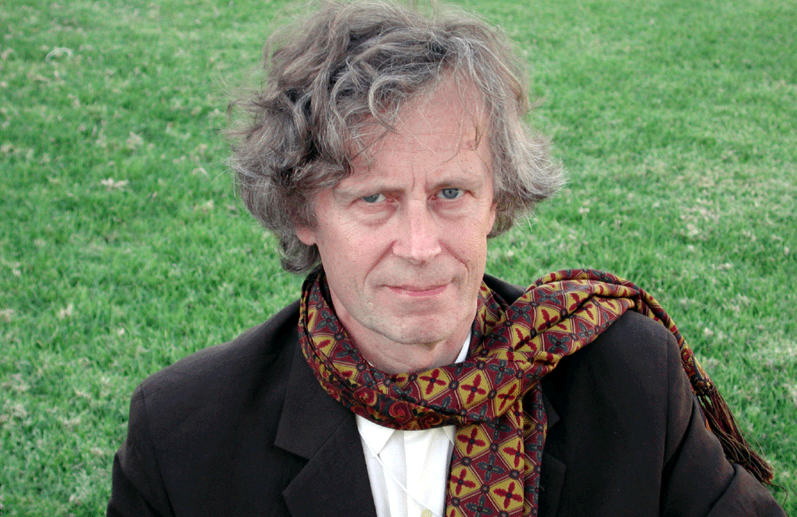
Q: What influence has McLuhan had on you? Was there a flash when you realized the importance this man would have in your life or in the work that you would do?
A: Yes, the influence of McLuhan on me, and I am saying on me, not just my work, was pretty radical. Very strong, and very continuous. And it happened in stages, deepening stages. The first time was just coming into his room for the first class …
When you walk into a proper study, you are confronted by an overwhelming surface of book-spines, all displaying more titles, all at once, than you can consciously read. And yet, you can soak them in rather quickly. They are mostly non-fiction. They are all related to a few topics which are gone into in-depth and overlap like a gradient.
It is clear that the owner has spent several decades amassing this collection, and now sits in this room like the focal point of the concave surface which these books converge into. Through methodical reading, through the gentle weaving of a tapestry of associations and resonances (and some connections), these books have provided a lever out into space, onto which the reader has gradually migrated the interiority of their being. They have, over much applied experience, developed a point of view …
In my last post, I gave a response to a question that had been asked by a viewer regarding my MEA presentation. The question came in two parts, the first part being “about the relation between the simultaneity of the computer (due to electric speed up) and the linear one-thing-at a-time structure of the CPU.” In the second part, it was clarified to be a question of whether the computer is “electric” in the sense McLuhan meant in using the term. I interpreted it to be about how McLuhan saw electric media of his day, vs. its nature today. My response began definitively, “No…”
This morning I was pleased to find a response from Prof. Derrick de Kerckhove in my email inbox!
…This is a lovely and instructive comment, Clinton and I enjoyed it a lot. The main