Full-Stack Media Ecology

Category: Uncategorized (Page 5 of 6)

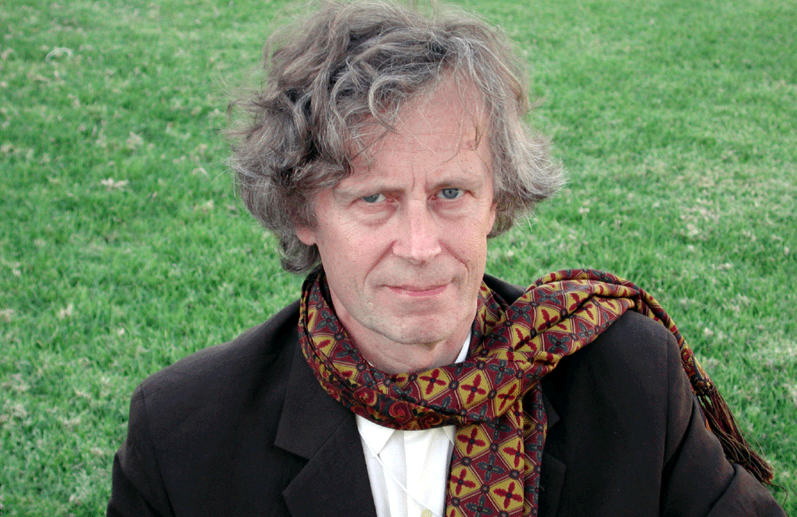
1995 – Derrick de Kerckhove on Marshall McLuhan

I loaded up Windows 3.1 in order to run a 1995 interactive CD-ROM called Understanding McLuhan and there was an interview section full of interviews! Here is second never-before-posted-online interview, this time with McLuhan’s student and translator, and long-time director of the McLuhan Center at UofT, Derrick de Kerckhove. Unless you bought this CD two decades ago, you haven’t read this!
 

Q: What influence has McLuhan had on you? Was there a flash when you realized the importance this man would have in your life or in the work that you would do?

A: Yes, the influence of McLuhan on me, and I am saying on me, not just my work, was pretty radical. Very strong, and very continuous. And it happened in stages, deepening stages. The first time was just coming into his room for the first class …
Derrick de Kerckhove’s rebuttal to my de-electrification of computing

In my last post, I gave a response to a question that had been asked by a viewer regarding my MEA presentation. The question came in two parts, the first part being “about the relation between the simultaneity of the computer (due to electric speed up) and the linear one-thing-at a-time structure of the CPU.” In the second part, it was clarified to be a question of whether the computer is “electric” in the sense McLuhan meant in using the term. I interpreted it to be about how McLuhan saw electric media of his day, vs. its nature today. My response began definitively, “No…”

This morning I was pleased to find a response from Prof. Derrick de Kerckhove in my email inbox!

This is a lovely and instructive comment, Clinton and I enjoyed it a lot. The main

A Faculty of Interrelations

The importance of this essay by Architectural Historian Siegfried Giedion in the history of media ecology is well laid-out on the McLuhan’s New Sciences blog. Transcribed from the April 1944 issue of Architecture and Engineer Magazine and reproduced here in full.

WE HAVE TO MAKE ORDER

… A Faculty of Interrelations

By SIEGFRIED GIEDION

Great changes are foreshadowed in our cultural structure. The elements of this change already exist in science, whether biology or physics, in art, in architecture and in many other fields. But these elements are unrelated: they have no inner contact with one another.

There can be no question that what is and what will continue to be the outstanding task of our time, interrupted at the moment by a dangerous war. Even as the soldier has to prepare the means of defense in peace times, …

1995 – Camille Paglia on Marshall McLuhan

I loaded up Windows 3.1 in order to run a 1995 interactive CD-ROM called Understanding McLuhan and there was an interview section featuring Camille Paglia! I searched some excerpts and apparently this interview has never been posted online before. So unless you bought this CD two decades ago, you haven’t read this! Pretty cool, eh?

Camille Paglia

Q: Could you tell us a little about your intellectual connection to Marshall McLuhan?

A: My name is Camille Paglia. I am Professor of Humanities at the University of the Arts in Philadelphia, and I am the author of two books: Sexual Personae and Sex, Art and the American Culture. I consider Marshall McLuhan one of the great masters of my college years. I was in college in 1964 to 1968, at the very high point of the ‘60s revolution. Marshall McLuhan was assigned in …

A McLuhan-syntonic Approach to Computer Literacy: Toppling the Pillars of Cyberspace

On June 29th, 2019, I delivered the above presentation to the Media Ecology Association at their 20th Annual Convention in Toronto, on the U of T campus, based on this paper. Learn more about the convention at mediaethics.ca. Attempts to move the paper toward a more finalized form have resulted in sprawling additions which will require much work, however I hope the draft below suffices to entertain curiosity piqued by the video. 🙂 – Clinton, 08/02/19

This paper is undergoing a significant re-write, not least to address some typos and add more sources. Please consider it a draft in its present form. – Clinton, 02/21/19

Cyberspace is a fictional sensory environment with a traceable history. It is formally defined — much like the Euclidean space which Wyndham Lewis feared losing, and which Marshall McLuhan announced obsolete thirty years later. …

Web 1.0 as content of Web 2.0

In a 1964 article entitled New Media and the Arts published in the University of Wisconson’s Arts in Society, Marshall McLuhan summarized his theory of media as so:

To sum this up, it can be enunciated as a principle that all new media or technologies, whatever, create new environments, psychic and social, that assume as their natural content the earlier technologies. Moreover, the content of these new environments undergoes a progressive reshaping so that what had appeared earlier as dishevelled and degraded becomes conventionalized into an artistic genre. TV, as the latest archetypal environment or technology, is very much in this dishevelled phase. The movie remained in such a dishevelled phase for decades. Whether Telstar is already a new archetypal environment that assumes the present TV form as its content will appear fairly soon. The principle of new technology as

What’s Changed Since McLuhan

In Marshall McLuhan’s time the globe had been criss-crossed by copper wires, etherized by aerial antennae, and circled by satellites. Unlike today, this communications infrastructure was not intermediated by computers. The signal was direct, excepting the time-delay of recording and playback. The content of McLuhan’s media was, in a word, analogue: it was transduced from the energy of its input by electronic sensor into transmittable signals of analogous proportion. This means that the sound waves were directly represented by fluctuations in the electricity of the wires carrying them or the electromagnetic radio waves being broadcast. The light being picked up by the television cameras scanning finger was faithfully reproduced on the cathode ray tube. While the form of each media certainly had a role in shaping and biasing the content by its forms, the “nerves” of the electronically-extended nervous system …

Silicon & Charybdis III: McLuhan & Microcomputers

After over a year of work, I’m very pleased to release Silicon & Charybdis III: McLuhan & Microcomputers! It’s a leap above the first two episodes, and I hope you find it to be the authoritative, definitive history of the computer medium. How did simulation swallow everything? The short answer is: gradually. But the long answer is way more interesting and, more importantly, human.

It’s been a really long road toward producing this little documentary, so I hope you enjoy it as much as I do!…

« Older posts Newer posts »

© 2026 Concerned Netizen

Theme by Anders NorenUp ↑