Full-Stack Media Ecology

Category: Uncategorized (Page 4 of 6)

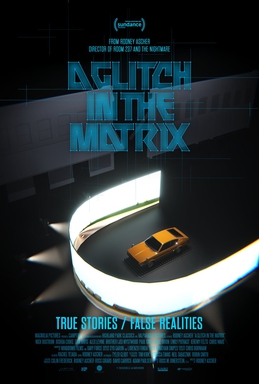
Stitched Into the Matrix: A Review

Since the industry’s pivot to peacetime in the late 1940s, computers have come to constitute our modern material environment literally, metaphorically, and aesthetically. Like a store-front window marketing display by Frank L. Baum, the ground-floor, street-facing show-room of IBM in the 1950s offered New Yorkers (regardless of outdoor conditions) a brightly-lit, unchanging view into the timeless, abstract world of computing outside of our own (Harwood, 46). Engineers in white lab coats moved spindles of tape and decks of cards, literally working inside the computer as they bused data between shiny large cabinets for curious onlookers twenty-four hours a day.

And there went everybody. The nature of the data being processed—demographic, financial, the results of opinion polling and sales data and audience testing and tracking—placed newly-minted “consumers” even deeper inside of computers. Not as components within the computer’s functioning, but as

Two new long video interviews

In the past two weeks I’ve been interviewed twice on two different excellent podcasts.

The first was for the first McLuhan Symposium on the Parallax Podcast Sweeny vs Bard hosted by Alexander Bard and Andrew Sweeny.

And the second was with James Kourtides on his podcast The Rooster’s Crow.

Check them both out!…

Lots of new off-site Activity

Hey folks!

I know it looks like not much has happened here lately, but that’s because I’ve been working on lots of larger projects.

First and foremost: I’m very pleased to take on the responsibilities of Journal Production Manager and Associate Editor for The New Explorations Journal out of the University of Toronto. This peer-reviewed academic journal assumes the mission statement of Marshall McLuhan and Ted Carpenter’s original Explorations journal. We also run a regularly-updated blog (linked to above) to which I’ve been contributing new writings!

But what about the podcast?

I’ve had lots of ideas about what to do with Life in the Foam. However, once again, I haven’t been inactive. The New Explorations Journal also has a podcast which has already released three episodes (at the time of this posting).

When the next copy of the journal …

The Corporate Mob

The simultaneity of electric communication creates an environment of togetherness for users. By using these media, individuals are irresistibly collectivized through its content. Individuals whose bodies are scattered across the habitable face of the planet get the uncanny sense of being in the same place, creating shared memories in common and, thus, share in common identity. Having traveled together, the result is a tribalism which is called—quite pointedly—mass. Communing in the same shared electric body, mass audiences are the dominant subject of 20th century history: it is the mediums of press, radio, and television which unite the developed world.

The innate sense of belonging, or co-involvement in a group is palpable. And yet today we find that sense of electric interrelation artificially mis-interpreted, pigeonholing our modern tribal identity into statistically-quantifiable, superficial signifiers.  The source of our feeling of belonging to …

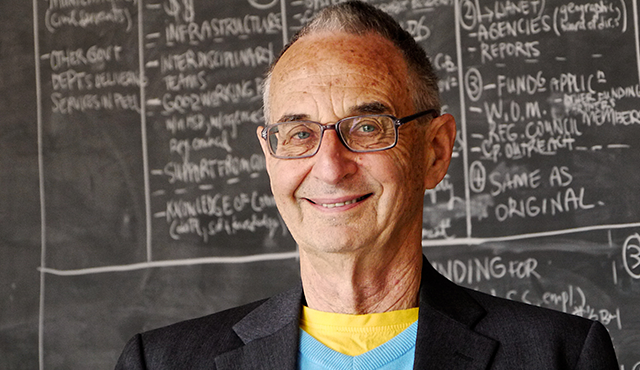
1995 – Neil Postman on Marshall McLuhan

After Marshall McLuhan’s passing in 1980, educator and lifetime New Yorker Neil Postman became the central figure in the field which has come to be known as Media Ecology.

Through his work both in founding Media Ecology as a graduate program and in authoring many of its key texts, such as Amusing Ourselves to Death, Technopoly, and Building a Bridge to the Eighteenth Century Postman taught generations growing up late in the age of television—during the early rise of microcomputers—to use enlightenment values in carefully and consciously assessing the potentials and morality of modern technology through consideration of his six questions, which are:

1. What is the problem to which this technology is the solution?

2. Whose problem is it?

3. Which people and what institutions might be most seriously harmed by a technological solution?

4. What new

Mission Statement

Human being can be considered from two inextricably interwoven perspectives: Human nature and the human condition. Think of it as nature vs. nurture, except what is nurturing our being is the total physical environment all together.

Since post-modern theories of Social Constructionism focuses only on the content of media as environmentally-constitutive, it fails to present a relatable account of the contemporary human condition for a growing number of people. That is where Media Ecology comes in.

Creating and internalizing a fuller view of our material, technological world allows all human being—human beings—to become clearer and more relatable by relief. People as products of their environment become distinct and empathetic as we internalize the total environment as backdrop and see how it differently shapes all of us.

Only once we see the physical world for what it is can we put …

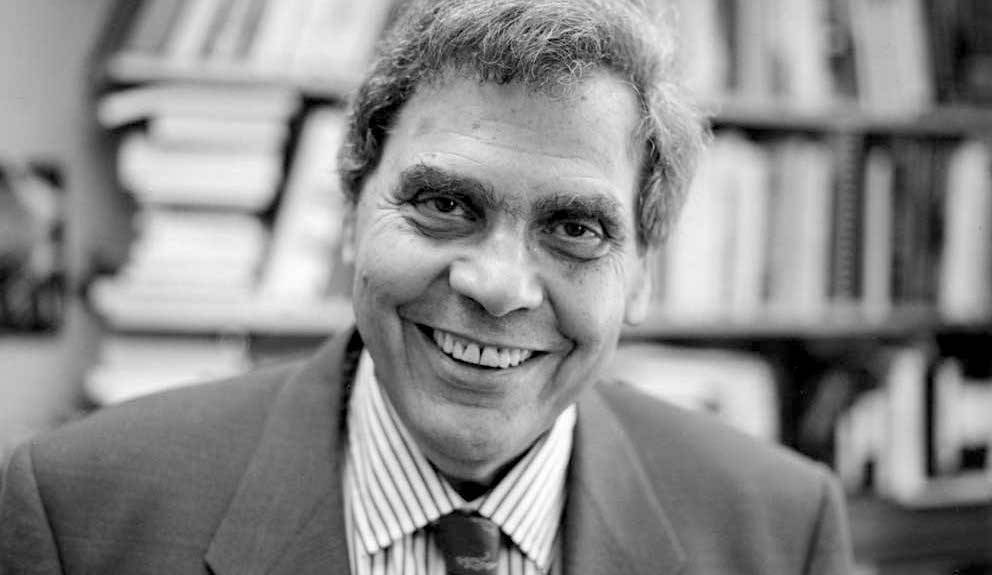
1995 – Bob Logan on Marshall McLuhan

Continuing my extraction of interviews from the 1995 Understand McLuhan interactive CD-ROM, I’m very happy to share an interview with Robert K. Logan, former University of Toronto physics professor, communications theorist, author and collaborator with Marshall McLuhan. His defense of his colleague and friend, McLuhan Misunderstood: Setting the Record Straight, is an invaluable essay providing essential context for reading and empathizing with the “guru of the electronic age”. Nobody can better provide a “hard science”-informed bridge to the enigmatic, artistic McLuhan than Bob Logan.

Q: Can you tell us a bit about your relationship with Marshall McLuhan?

A: Well, I would like to talk about my relationship with Marshall McLuhan, because it was a great privilege to have known this man and to have been able to have collaborated with him. I was first introduced to him by …

Virtual Reality, 90s Style

I had a great visit today to the research library at The McLuhan Institute, run by Andrew McLuhan and stocked with his father Eric’s vast collection of materials. It’s an extra-acadamic resource for studying media, containing many historical and current books (presently being catalogued) marked-up and annotated by Eric McLuhan, tying them into and updating the legacy of Marshall McLuhan’s media work. I found lots of interesting things penciled in the books I flipped through.

For instance, in Virtual Reality by Howard Rheingold I found some underlines Eric made in this paragraph of page 16.

Imagine a wraparound television with three-dimensional programs, including three-dimensional sound, and solid objects that you can pick up and manipulate, even feel with your fingers and hands. Imagine immersing yourself in an artificial world and actively exploring it, rather than peering in at it

« Older posts Newer posts »

© 2026 Concerned Netizen

Theme by Anders NorenUp ↑