Concerned Netizen

Full-Stack Media Ecology

Page 4 of 10

The Helens of Baskerville

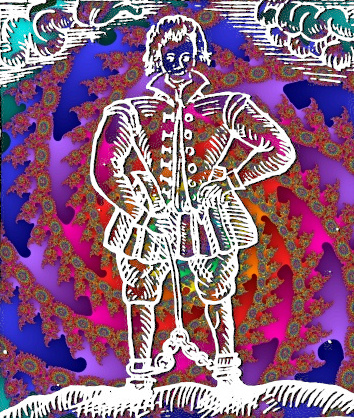
Good news, everyone! Science has finally, finally delivered us something it’s been long promising: the much-anticipated portal to hell, teeming with summonable demons.

An ugly AI woman with dead-looking children.

It’s about goddamned time!

This is literally the reason for Marshall McLuhan’s beef with Northrop Frye. That later. First, here’s the deal.

These A.I. art generator thingies are trained on millions upon millions of images. Also, they can detect features of those images, including objects within them describable by human language. Roughly speaking, they can “read” what’s “in” a picture, and then reverse the process to generate images based on whatever prompts we “write.”

We can take the whole sum of millions and millions of images—photographs and artworks and whatever else—that these things have synthesized into coherency as some kind of unprecedented summation or unity of culture. Clearly there will be over-representation of lots of things—you know, …
Oh, For the Love of Knowledge!—Default Friend Exclusive

Another post I’ve written exclusively for Default Friend‘s excellent Substack.

Last article, I insisted that nearly everyone who popularizes McLuhan mangles him and his message. Why? If you want to think of causality in the sequential terms of linear cause-and-effect, then there are many causes. (Of course, when you read Laws of Media and Media and Formal Cause, you learn that cause-and-effect account for only a fourth of what causality is… but that formality would be a huge digression at this point.)

So, ahem….

🫴Click here to read more over on her Substack!👈

Misreading Marshall—Default Friend Exclusive

My friend Katherine Dee has asked me to write regularly for her Substack blog, and I’m thrilled to accept! She’s been covering the internet history beat for a while now with wonderful research and gathering lots of momentum. Here’s my first piece.

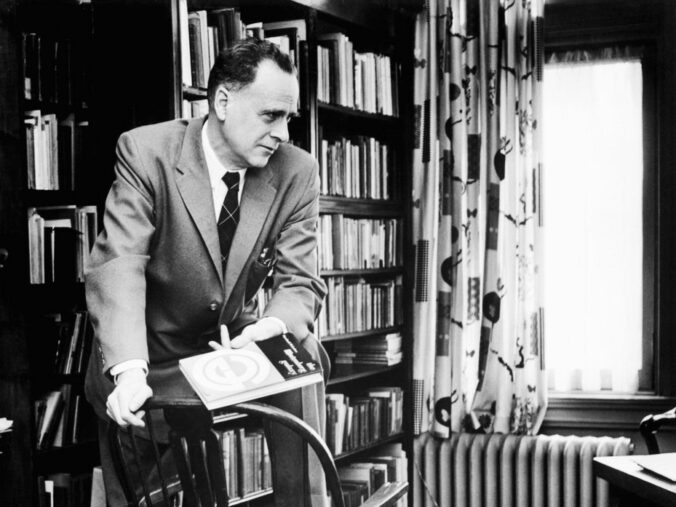
Ezra Klein—founding editor of Vox, contributor to the New York Times, and, where I knew him best, former MSNBC pundit—has made two distinct moves aiming to launch Canadian media theorist Marshall McLuhan (1911-1980) back into the public conversation. I was nine-hundred words into a written analysis of these last night when this little gem of a tweet popped up on my timeline….

🫴Click here to read more on her Substack!👈

McLuhan’s Synthesis—Part Three

I began studying McLuhan heavily in 2017. Since I had no formal education—or even cursory introduction—to many of the subjects and fields he draws upon in his works, I had no sieve for separating his own idiosyncrasies from the mainstreams of thought within and against which he plays.

The larger part of the past five years, beyond reading and absorbing McLuhan’s primary texts has been, then, to also catch up on what everyone else has taught and learned regarding media, literary criticism, and so-called post-modernity.

That’s because reading McLuhan carefully is to read a guy who was always nitpicking whatever larger, impersonal current of thought everyone around him was being swept up in. Before the early ‘50s, he was always fighting to go against the flow.

In an unpublished polemic he wrote against public intellectual Syndey Hook in the …

McLuhan’s Synthesis—Part Two

The Nashe Thesis

I have been setting up to make the case that a) a sense of proportion is lacking from our perception of the material world, both natural and artificial, and that b) Canadian thinker Marshall McLuhan (1911-1980) gives us the fastest and easiest way to restoring that proportional sensibility via the slow and difficult study of his work—studies I’ve been diligently undertaking since 2017.

To make my point, I must begin by hyping the first “book” he wrote, one which virtually nobody outside the circles of Media Ecology has read.

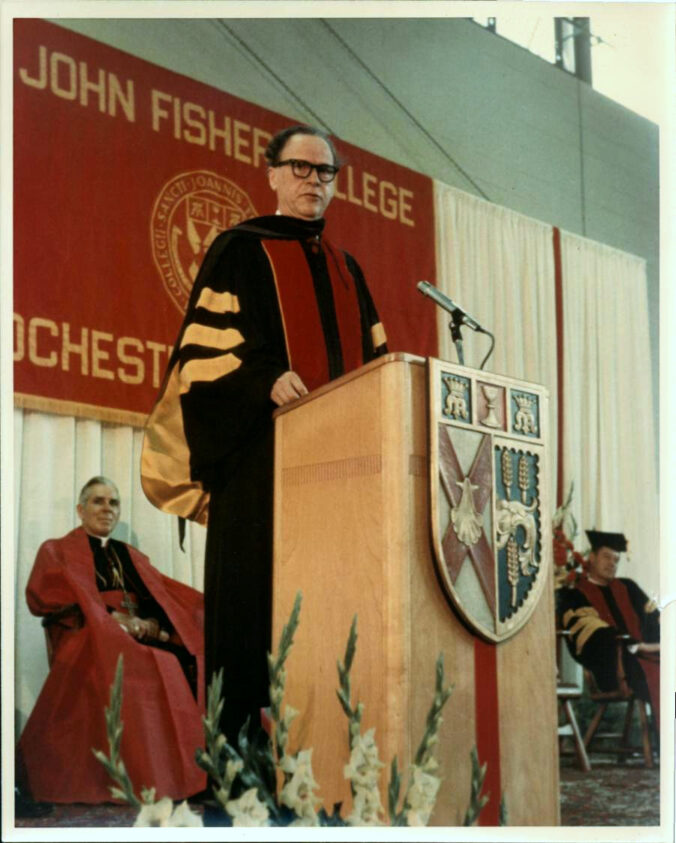
I suspect that Marshall McLuhan’s doctoral thesis for the University of Cambridge, The Place of Thomas Nashe in the Learning of His Time is the most audacious and erudite historical overview of philosophy and intellectual history ever written. It’s nothing less than a total synthesis of everything in …

McLuhan’s Synthesis—Part One

This is the beginning of a series explaining the road-not-taken in the academic field of literary criticism. The result has been the academic dominance of critical theory and a century of post-modernism (or Baudrillardian Simulation, or Orwellian historical revision, or however else you might put it).

Thee Thy, Though Thumb

The missing ingredient in all contemporary media analysis is appreciation for analogical proportionality. The reason this factor has been lacking, I think, is the catch-22 of requiring the faculty in order to develop it further. The difficulty is like that of Tom Thumb were he to hitch a ride with Jack up the beanstalk on a mission to educate the giants on the apples and the oranges: implicit barriers between a whole stack of several differing orders of magnitude must be overcome merely to put any modern situation into fluent …

Media Ecology of Source Code Access

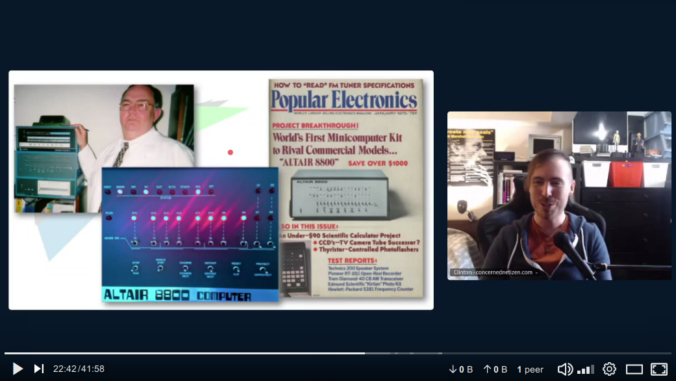
That was a lot of fun! Here’s my presentation to the Free Software Foundation at this year’s LibrePlanet conference. The audio, it seems, was being picked up by the wrong microphone, so I’ve plans to re-work and expand the topic in a series of videos, having benefited from a lot of helpful feedback and criticism. So keep your eye on this space, follow me on Twitter or YouTube, and buckle up for a content-ful 2022! 😀…

TODAY! I’m speaking at Libreplanet 2022!

A4:20 Eastern (😏) I’ll be giving a talk about media ecology and McLuhan to the great group of folks at Libreplanet 2022, the annual convention organized by the Free Software Foundation! You can find my talk streaming in the Neptune Room (the third video tab). Come check it out!

Viewers interested in learning more about Media Ecology can visit:
The McLuhan Institute (run by Andrew McLuhan): https://themcluhaninstitute.com/
New Explorations Journal (academic journal): https://newexplorations.net/
The Media Ecology Association (annual conventions): https://www.media-ecology.org/
The McLuhan Foundation (educational resources): https://mcluhanfoundation.org/

Conversely, read more about free software at https://fsf.org!

In my talk, I am suggesting Free Software users and Media Ecologists alike delve into the rich past of computing, and uncover the “anonymous history” of our digital world. Here are three highly-recommended books, each available free online courtesy of their authors:

Those unfamiliar with …

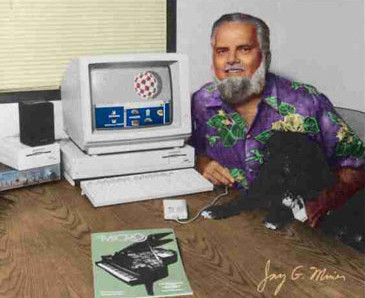
The Best Book Never Written on Amiga Computers

I’ve been thinking a lot about how much Apple and Microsoft have sucked up all the air in the room regarding the history of microcomputers. Docudramas, biographies, and news stories exalt the dominance of the two major corporations creating our PC environments.

What culture needs is the larger picture, the fuller story of the way these machines entered into our world. I remembered a series of articles I had read over a decade ago regarding the history of Amiga Computers. Just like the mythos around Woz and Jobs in the garage, wiring up the first Apple machines, the story of the Amiga is charged with wonder and marvels.

I rediscovered those articles today, and discovered that the series has tripled in length since I first read them. Since they’re spread throughout the site, I’ve compiled the “chapters”, as it were, …

« Older posts Newer posts »

© 2026 Concerned Netizen

Theme by Anders NorenUp ↑